A quality seal can answer a useful question about a supplement: Is this product likely to contain what its label says, in the stated amount, without unacceptable levels of specified contaminants? It cannot answer the question many shoppers care about most: Will taking it improve my health?
That distinction matters. A capsule can be accurately labeled, carefully made, and still offer no proven benefit for the reason you bought it. It can also contain exactly the advertised ingredient and be a poor choice because of your medications, a medical condition, or the dose. The National Institutes of Health makes the distinction explicit: independent quality seals do not guarantee that a supplement is safe or effective.
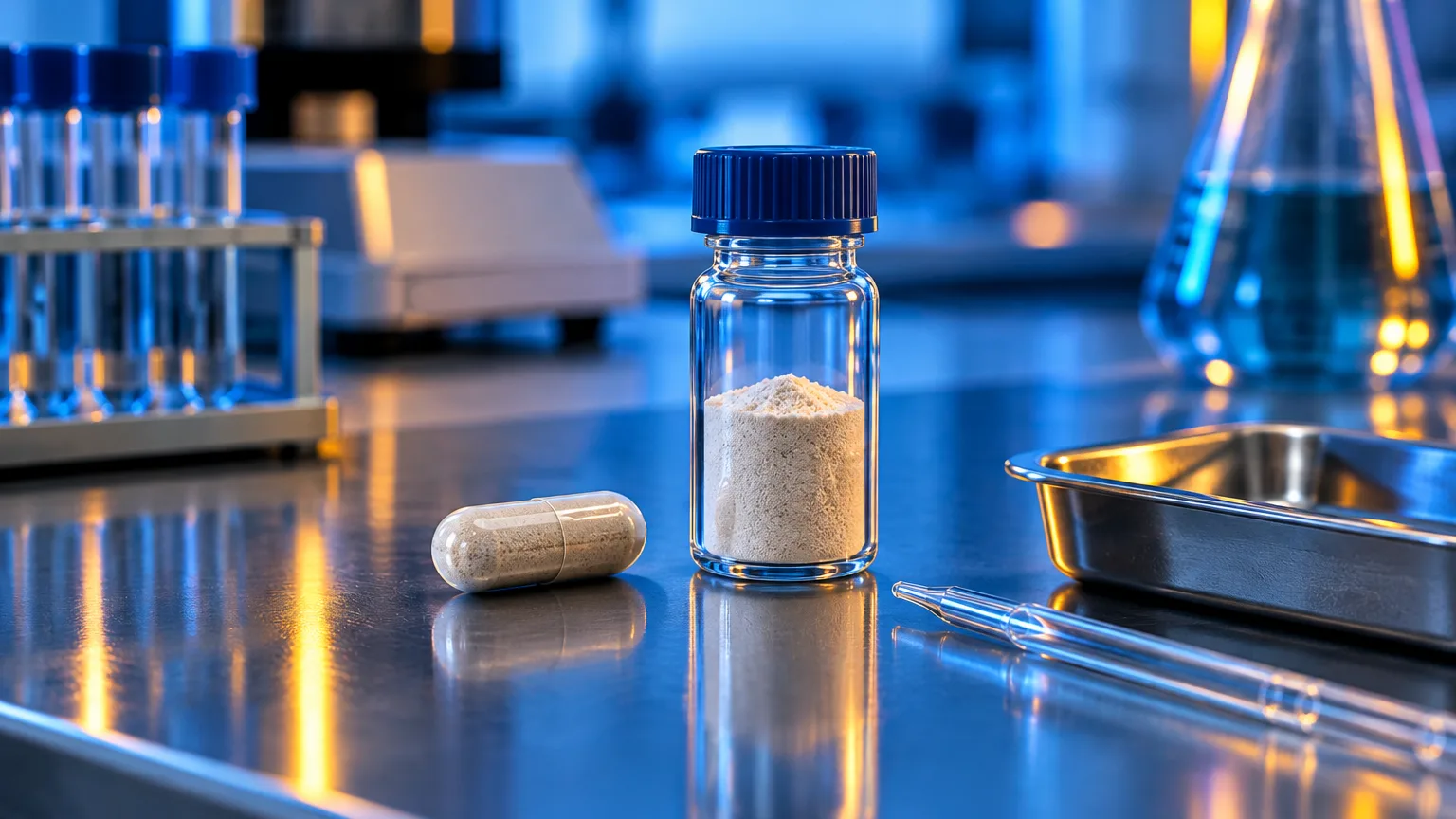
The best way to use third-party testing is as one part of a decision—not as a substitute for deciding whether you need the supplement in the first place.
What an independent quality seal checks
A third-party certification program evaluates a product outside the company that sells it. Programs differ, but a product-level review may combine laboratory tests with a review of the label, manufacturing records, and production facility. The checks generally address four practical questions.
First, identity: Is the ingredient the one the company claims to have used? This is especially important for botanical products, where a plant name alone may not tell you enough about the material in a bottle.
Second, amount: Does the tested product contain the declared quantity of its ingredients? For example, a label that lists 200 milligrams of magnesium per serving makes a measurable claim. Confirming that amount is different from confirming that the product helps with sleep.
Third, contamination: Does the product meet the program’s limits for the substances it tests? Depending on the product and program, those checks may cover toxic elements, microbes, pesticides, or undeclared ingredients. “Tested for contaminants” does not mean tested for every possible contaminant, and “passed” does not mean that every substance is present at zero.
Fourth, manufacturing consistency: Some programs inspect facilities and review quality controls, then retest products after certification. That matters because a good result from one sample says less about future bottles than a program that also checks how the product is made and monitored.
The scope is in the program’s requirements, not in the word “tested” on the package. A company may pay a laboratory to analyze one sample for one substance; that is not the same claim as independent product certification with facility review and follow-up testing.
What USP and NSF marks mean—and how they differ
The USP Verified Mark indicates that a dietary supplement has met U.S. Pharmacopeia’s program requirements for declared ingredients and amounts, specified contaminants, manufacturing practices, and breakdown and release of ingredients within a specified time. The breakdown check is useful for a tablet that needs to release its contents. It is not a clinical test showing that taking the tablet produces a health benefit.
NSF Contents Certified evaluates ingredient identity and label accuracy, screens for relevant contaminants, and includes ongoing facility audits. NSF’s Certified for Sport program adds screening aimed at substances prohibited in sport, along with formulation and label review, inspections, and monitoring. That added scope matters to someone subject to drug testing; an ordinary supplement quality seal should not be read as a banned-substance certification.
These are examples, not the only legitimate approaches. Testing organizations set different requirements and publish different levels of detail. Nor does the absence of a seal establish that a product is poor quality. It means the shopper does not have that particular program’s independent assurance.
One easily missed distinction is between certification of a finished product and an audit or certification of a facility. A manufacturing audit assesses practices at a production site; by itself, it does not show that the particular supplement in your hand passed product testing. Likewise, testing an ingredient before manufacture is not identical to testing the finished bottle.
A seal does not test whether a health claim is true
“Label accuracy” and “health benefit” sound close in advertising, but they require different evidence. A lab can measure how much of an ingredient is in a serving. It cannot establish, from that measurement, that the serving improves memory, lowers stress, or prevents illness.
Suppose a supplement promises better sleep and carries a credible quality seal. The seal may give you greater confidence in the ingredient identity, the stated amount, and the contaminants covered by its program. You would still need research on that ingredient or product to judge the sleep claim. You would also need to consider whether the studied dose and people resemble your situation.
This is why even a well-run quality program is not a stand-in for clinical studies. The FDA does not approve dietary supplements for safety and effectiveness before sale, though companies remain responsible for meeting applicable safety and labeling requirements and the agency can act against products that violate the law. A third-party mark is not “FDA approved,” either.
A product can pass testing and still be wrong for you
Purity addresses risks from unwanted material. It does not remove risks from the ingredient you intended to take. The declared dose may be too high for you, the ingredient may have side effects, or it may interact with treatment you already use.
Those concerns deserve particular attention if you take prescription drugs or are preparing for surgery. Some medication–supplement interactions can be serious, and supplements may affect bleeding or the response to medicines used around an operation. If you need a practical starting point, check a supplement against your prescription medication before you start it.
Pregnancy, nursing, and use by children call for separate caution because many supplements have not been tested in those groups. A quality seal does not fill that evidence gap. It also cannot tell you whether you have a deficiency, whether a supplement is necessary, or whether taking several products gives you more of an ingredient than you intended.
“Third-party tested” is a claim worth checking
A label that says “third-party tested” may be describing a real laboratory analysis. It does not, on its own, tell you what was tested, which laboratory did it, whether the finished product was tested, or whether the result applies to the bottle you are buying.
If a seller offers a certificate of analysis, read it for the product or ingredient identified, the lot number, the date, the tests performed, the limits used, and the actual results. A report for a raw ingredient cannot establish every property of the finished supplement. A report for one lot should not be presented as proof about every lot. The FDA’s manufacturing guidance describes test methods, limits, and actual results as meaningful parts of an ingredient supplier’s certificate of analysis.
A named certification is easier to check. Search the certifier’s own records for the exact product, not just the brand. NSF provides a directory of certified dietary supplements; its sports program has a separate search for certified products and lot numbers. The same basic rule applies when you verify a professional certification: the issuer’s record is stronger evidence than a logo displayed by the party claiming the credential.
For drug-tested athletes, matching the lot is especially important. The U.S. Anti-Doping Agency warns that certification logos have appeared on bottles from lots that were not certified. It recommends programs that test for substances prohibited in sport, while stressing that certification reduces—not eliminates—the risk of a positive test.
Use the seal to answer the right question
Before buying, start with the health question: What am I taking this for, and what evidence supports that use? Then check the ingredient, dose, and any reason it might be unsuitable for you. Only after that should a quality seal help you choose among products.
Look for a named, independent program that certifies the finished product. Confirm that the exact product appears in the program’s records, and check the lot when the program provides lot-level verification. If all you have is “lab tested” on a sales page, ask what was tested and request the results rather than treating the phrase as a certification.
A credible seal is valuable because it narrows uncertainty about what is in a bottle and how it was made. It does not establish that the supplement works, that you need it, or that it is safe for everyone who takes it.
Disclaimer
This article provides general health information, not personal medical advice. Ask a qualified health professional about a supplement if you take medication, have a medical condition, are pregnant or nursing, or are considering one for a child.