A toothache that wakes you from sleep deserves a call to the dentist. A toothache with a swelling face, fever, or trouble swallowing may need care much faster. And if a permanent tooth has been knocked out, the first few minutes can affect whether it can be saved.
The key question isn’t simply how much it hurts. It’s whether there are signs of spreading infection, an injury that needs prompt treatment, or bleeding that won’t stop. Those details tell you whether to seek emergency medical care, ask a dentist for an urgent appointment, or book a routine visit.
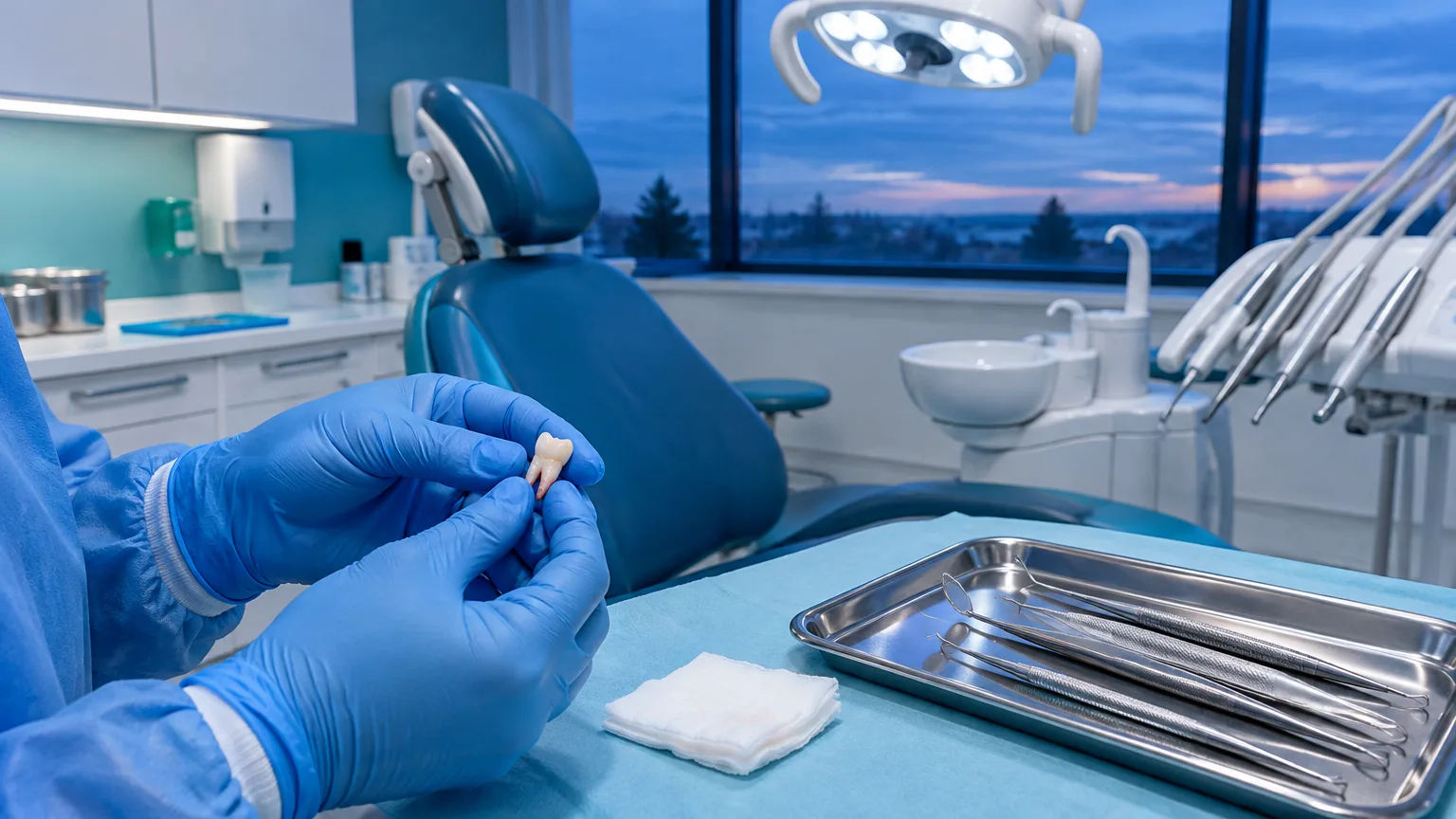
Go to an emergency department for signs of serious infection or injury
Call 911 if you’re having trouble breathing. Seek emergency medical care if a dental problem comes with difficulty swallowing, rapidly increasing swelling, swelling spreading toward an eye or down the neck, or a high fever with signs that you’re seriously ill. These can signal an infection that needs more than an office dental visit. A suspected broken jaw—for example, after a blow to the face when your upper and lower teeth no longer meet normally—also needs immediate medical assessment.
Bleeding is another reason to act quickly. Apply firm, direct pressure with clean gauze. If bleeding is heavy or doesn’t stop with pressure, seek emergency care rather than waiting for the dental office to reopen. Tell the treating team if you take a blood thinner; don’t stop a prescribed medication on your own.
A small amount of blood-tinged saliva after an extraction is different from active bleeding that keeps filling your mouth. The American Dental Association notes that some bleeding after an extraction is normal. Follow the aftercare instructions you were given, and call the dentist who performed the procedure if you’re unsure what you’re seeing.
An emergency department can assess threats such as a spreading infection, serious facial injury, or uncontrolled bleeding. You may still need a dentist afterward to treat the tooth that caused the problem. Don’t delay emergency care while trying to arrange that dental visit.
Call a dentist urgently for swelling, severe pain, or a damaged tooth
If you can breathe and swallow normally and have no signs of serious injury, the dentist is usually the first call. Explain what has changed and ask how soon you need to be seen. The ADA’s guidance on urgent dental care includes severe tooth pain, localized abscesses, and tooth injuries—not just life-threatening emergencies.
Swelling or a gum bump can mean infection
Call promptly if you notice a new swollen area beside a tooth, a pimple-like bump on the gum, a bad taste along with tooth pain, or swelling in your cheek or jaw. An abscess is a pocket of infection. Decay, gum disease, or a cracked tooth can let bacteria reach tissue around a tooth, and an untreated infection can spread into nearby areas. Pain, swelling, gum redness, a bad taste, and fever are all possible signs.
Don’t use pain alone to judge whether the problem has passed. Pressure may ease when an abscess drains, so the tooth can suddenly hurt less even though the infection remains. A new foul taste or drainage is a reason to call, not a reason to cancel an appointment. If facial swelling grows, you develop fever, or swallowing becomes difficult, seek emergency medical care.
Pain that persists or disrupts sleep needs assessment
A brief sting from a cold drink is not the same as a tooth that throbs on its own. Call for an urgent appointment if pain is severe, keeps returning, prevents sleep or eating, or doesn’t settle with appropriate over-the-counter pain relief. Pain that lingers after hot or cold food, or sharp pain when you bite, also deserves a prompt evaluation. These symptoms can have different causes; the American Association of Endodontists’ guide to tooth pain notes that decay, a loose filling, a crack, and damage inside the tooth can produce overlapping symptoms.
The dentist may need to examine the tooth and take X-rays before deciding what will help. Depending on the cause, treatment might involve a filling, root canal treatment, drainage, or extraction. Taking a pain reliever may make the wait bearable, but it won’t repair a crack or remove an infection.
A loose, displaced, or painful broken tooth shouldn’t wait
Call immediately after an impact if a tooth is loose, pushed out of position, or broken in a way that causes pain or cuts your tongue or cheek. Even a tooth that looks intact may have been injured. A dentist can check the tooth and surrounding tissue and advise whether it needs treatment or follow-up.
A small chip without pain, looseness, or a sharp edge is usually less urgent, but it still needs an appointment. The distinction is the effect of the injury, not whether you can see a dramatic break.
A knocked-out permanent tooth is a race against time
If a permanent tooth comes all the way out, contact a dentist or endodontist immediately and start moving toward care. The American Association of Endodontists advises trying to get there within 30 minutes. Treatment can still be worth seeking after that, so don’t give up because time has passed.
While arranging help:
- Pick up the tooth by its crown—the part you chew with—not the root.
- If it’s dirty, rinse it gently with water. Don’t scrub it, use soap, or let it dry.
- If you can, gently place it back in its socket without forcing it. Hold it there with gentle pressure or bite on clean gauze.
- If you can’t replace it, put it in milk or a tooth-preservation solution and bring it with you. Don’t store it dry.
The baby-tooth rule is different: do not put a knocked-out baby tooth back into its socket. Doing so can harm the permanent tooth developing underneath. Have a dentist assess the child promptly, especially if you aren’t sure whether the lost tooth was a baby or permanent tooth. If the injury also involves a suspected broken jaw, heavy bleeding, or another serious injury, seek emergency medical care.
What can usually wait for a routine appointment?
“Not an emergency” doesn’t mean “ignore it.” A short-lived twinge from cold food, a painless minor chip, or a little gum bleeding when you’ve just started flossing can generally be discussed at a regular dental visit if there’s no swelling, ongoing pain, or injury requiring faster care. Momentary temperature sensitivity is different from pain that lingers or appears when you bite; a crack can cause intermittent symptoms before it becomes obvious.
If a filling or crown comes loose, call the office and describe whether the tooth hurts, feels sharp, or is hard to chew on. The dentist can tell you how quickly to come in. Likewise, gums that bleed regularly should be checked even if they don’t require an emergency visit.
Pay attention to the direction symptoms are moving. Mild sensitivity that stays brief is one thing; pain that becomes constant, a new gum bump, or swelling that grows is a reason to call again and ask for earlier care. After an extraction, a marked increase in pain can signal dry socket, which a dentist can assess and treat.
What to do while you arrange care
Call your dentist, explain when the problem began, and describe the pain, swelling, fever, bleeding, or injury in plain terms. If the office is closed, follow its after-hours instructions. Say if you have a condition or take medication that affects your immune system or bleeding, since that can change the advice you receive.
For a toothache, you can gently rinse with warm water and floss to remove food trapped between teeth. A cold compress against the outside of the face may help after an injury. Don’t place aspirin directly on a tooth or gum; it can irritate or burn the tissue. These first-aid measures for dental emergencies are meant to help you get to care, not replace it.
If you can take them safely, over-the-counter pain medicines may help temporarily. ADA guidance favors nonopioid medicines, such as ibuprofen or acetaminophen, for many cases of acute dental pain. Follow the package directions and ask a pharmacist or clinician before taking a medicine you’re unsure about—particularly if you’re pregnant, take a blood thinner, or have kidney disease or a history of stomach bleeding.
Don’t take leftover antibiotics in place of an evaluation. For many toothaches and localized infections, the priority is dental treatment rather than antibiotics alone. A dentist can decide whether antibiotics are needed alongside treatment.
When in doubt, make the call. A dentist can help sort a routine problem from one that needs a same-day visit; breathing trouble, spreading swelling, serious injury, or bleeding that won’t stop belongs in emergency care.
Disclaimer
This article provides general health information and isn’t a substitute for an evaluation by a dentist or medical professional.