A mood app can remind you to pause, name what you’re feeling, and try a coping skill. Those are useful things to do on a hard Tuesday. But if the app also implies that its daily check-in can tell you what’s wrong—or that a streak of exercises can stand in for treatment—it is asking for trust it hasn’t earned.
Mental health apps should support care, not replace it. That position isn’t a dismissal of digital tools. It’s a distinction between practicing a skill and finding out why someone is struggling, what treatment fits, and what to do when the situation changes. A phone can make the first task easier. It cannot reliably take responsibility for the others.
An app is good at helping you practice
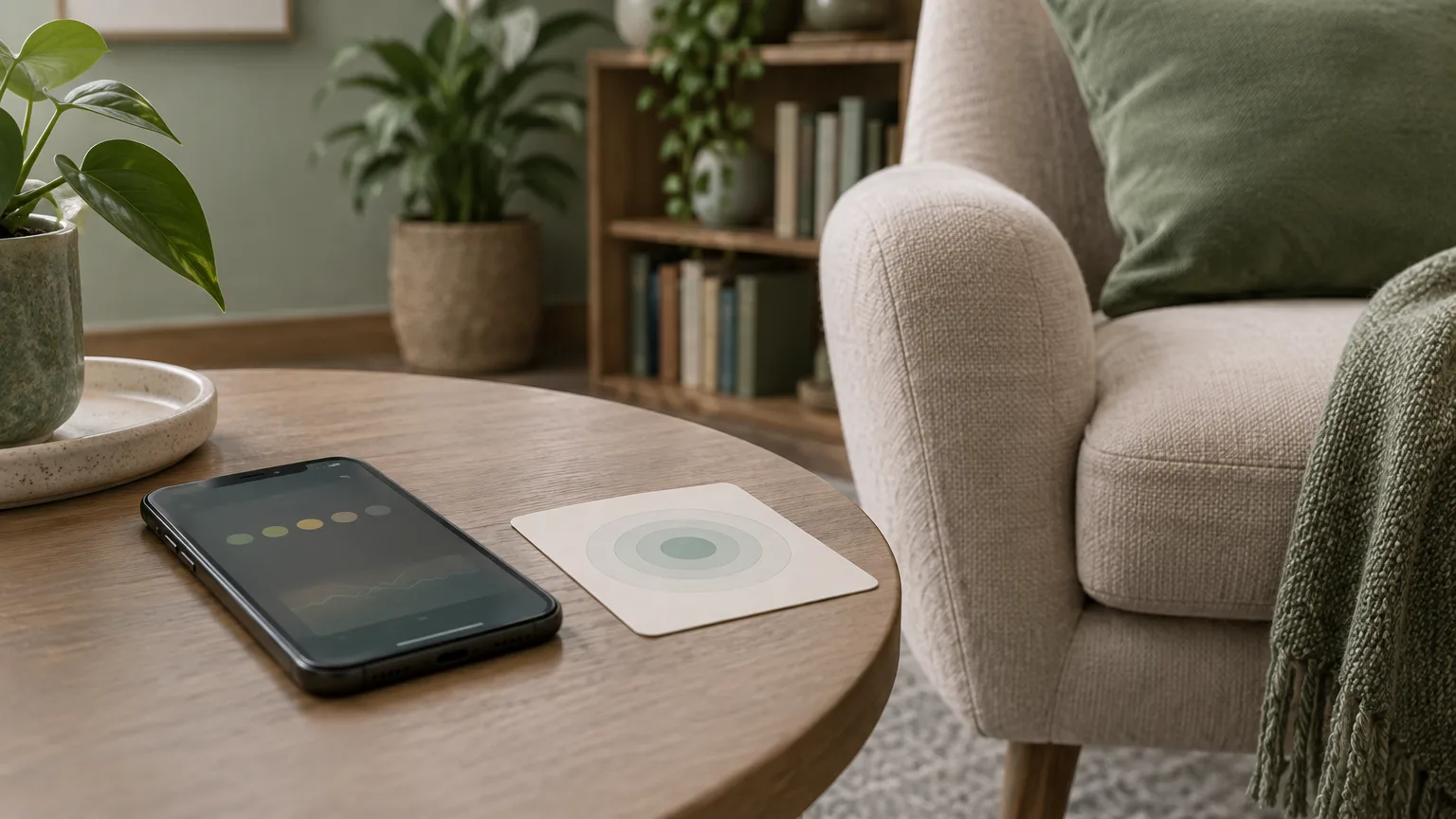
The best use of a mental health app is often modest: a place to record sleep and mood, a prompt to practice a breathing exercise, or a way to revisit a skill discussed in therapy. Tracking can make a conversation with a clinician more specific. Instead of trying to recall how you felt over the past month, you may be able to notice that your sleep worsened before your mood did, or that a particular situation repeatedly leaves you anxious.
That information is useful precisely because it remains information, not a verdict. The National Institute of Mental Health (NIMH) describes apps as possible ways to reinforce skills and monitor progress between sessions. A therapist can help decide which patterns matter and whether tracking itself is helping. For some people, checking symptoms several times a day may be less useful than briefly noting them once a week.
Small actions outside an app matter, too. If you’re using one to support a daily routine, it helps to understand what a walk can—and cannot—do for your mood. Neither a walk nor an app needs to be called treatment to be worth doing.
A symptom score is not a clinical assessment
Imagine two people entering the same answers into a depression questionnaire. One has been sleeping poorly while caring for a sick parent. The other has stopped enjoying anything, can barely get through work, and has recently started a medication that may affect mood. The matching scores do not tell the whole story.
A clinician can ask when symptoms began, how they affect daily life, what else may be contributing, and whether there are safety concerns. They can reconsider an initial impression as new information comes in. NIMH notes that medical conditions and medications can cause symptoms that resemble depression. A self-report score may signal that it’s time to seek help; it cannot settle the cause on its own.
Treatment also involves more than delivering exercises. The approach used for one condition may be a poor fit for another, and a plan needs to account for a person’s needs and medical situation. NIMH describes psychotherapy as treatment tailored to the person and the condition, with progress assessed along the way. A clinician can ask why a technique isn’t helping, change course, or discuss other options, including medication when appropriate.
That is the risk in calling an automated program a “therapist.” It can give a polished answer to the question it was built to recognize. It may not know when the more important question has gone unasked.
The evidence for apps is real—and narrower than the sales pitch
The strongest argument for apps is access. An exercise available at midnight is better than no exercise at all. A self-guided program may offer some help while a person waits for an appointment, cannot afford frequent sessions, or lives far from a provider. Dismissing that benefit would ignore the circumstances in which people use these tools.
Research supports a measured version of the argument. A 2025 review of 72 randomized trials involving 21,702 adults found that standalone apps improved some symptoms, including depression and anxiety, compared with inactive controls such as waitlists or informational materials. But those trials did not establish that apps work as well as clinician-led care. The reviewers also found considerable variation between studies and evidence of publication bias; adjustments reduced their estimated effects for depression and anxiety.
That leaves room to value an app without making it the default substitute for care. It may be a reasonable source of support when treatment isn’t available. It is a weaker answer when someone needs an assessment, symptoms are worsening, or an effective treatment could be accessed but is being postponed because the app promises to handle everything.
“Online therapy” complicates the discussion because the label can mean different things. Video sessions with a licensed clinician are therapy delivered through a screen, not an automated app replacing a clinician. A 2026 review comparing live video and face-to-face psychotherapy found no significant difference in symptom reduction across the trials it included, though the evidence was limited and varied. The useful question is not whether care happens on a phone. It is who provides it, what the treatment involves, and what happens if it isn’t working.
Some software also has a defined place in clinical treatment. For example, the FDA-cleared prescription app Rejoyn is indicated as an addition to clinician-managed outpatient care for certain adults with major depressive disorder who are taking antidepressant medication. That is an important exception to the idea that apps are only wellness products. It also illustrates the point: even a product cleared for a specific therapeutic use is not presented as a replacement for the clinician managing care.
Privacy is part of the decision, not fine print
A mood diary may contain the details a person is least willing to share widely. Before entering them, it’s worth asking where they go.
A health app is not automatically protected by HIPAA. The rules generally do not cover information entered into a consumer app that is not offered by or on behalf of a regulated health care entity, though other laws may apply. Even services involving clinicians warrant scrutiny: in 2023, the Federal Trade Commission finalized an order barring online counseling service BetterHelp from sharing sensitive health data for advertising.
Read the privacy policy for the app you plan to use, particularly what it collects, whether information is shared with advertisers or other third parties, and how to delete an account and its data. Check the permissions it requests. If a simple coping exercise requires access to your contacts or location, ask why. You can also choose to record less: “poor sleep, anxious morning” may be enough to spot a pattern without putting a detailed journal on someone else’s server.
Know when to put the phone down
The clearest sign that an app has reached its limit is that life is getting harder while the app keeps telling you to complete another exercise. If symptoms persist, worsen, or interfere with work, relationships, or basic daily tasks, arrange a conversation with a health care professional. NIMH advises seeking professional help for severe symptoms lasting two weeks or more, and speaking with a provider when milder symptoms worsen or self-care does not help. You do not have to wait two weeks to ask for help.
An app should not be your crisis plan. If you’re thinking about suicide, feel at risk of harming yourself, or need immediate emotional support in the United States, call or text 988 or use the 988 Lifeline chat to reach a crisis counselor. If you or someone else is in immediate danger, call 911. A notification, chatbot response, or scheduled check-in is not a dependable substitute for that contact.
The same limit applies when an app’s advice simply feels wrong for you. A tool should make it easier to recognize when you need another kind of help, not persuade you to ignore that judgment.
Give an app a job—and a stopping point
Before downloading one, decide what you want it to do. “Help me practice the grounding exercise my therapist taught me” is a job you can evaluate. “Fix my mental health” is not. Then ask a few practical questions:
- Does the developer identify who created the content and what evidence supports this particular app?
- Does it explain what to do if symptoms worsen or an emergency occurs?
- Can you use the features you need without sharing more personal information than you want to?
- After a few weeks, is it helping you practice or notice something useful—or just giving you another task to complete?
NIMH notes that most mental health apps lack peer-reviewed research supporting their claims. A recognizable therapy term in an app’s description is not evidence that the whole product has been tested. You can ask a clinician for a recommendation, but you can also decide that a notebook, a reminder on your phone, or no tracking at all suits you better.
Good support leaves the person with more choices, not fewer. Use an app if it helps you practice a skill, understand a pattern, or prepare for a conversation about care. When the question becomes what is happening to you and how to treat it, bring a qualified professional into that conversation. The phone can come along; it should not be in charge.
Disclaimer
This article provides general mental health information and is not a substitute for assessment or advice from a qualified health care professional.