The amount due isn’t the best place to start reading an electricity bill. That total may include last month’s unpaid balance, a credit, or a billing adjustment. To understand what electricity cost you this billing period, start with the service dates, the kilowatt-hours (kWh) used, and the itemized charges.
The distinction that matters most is between charges that stay much the same when you use less electricity and charges that rise with usage. On a time-of-use plan, there’s one more question: when did you use those kilowatt-hours?
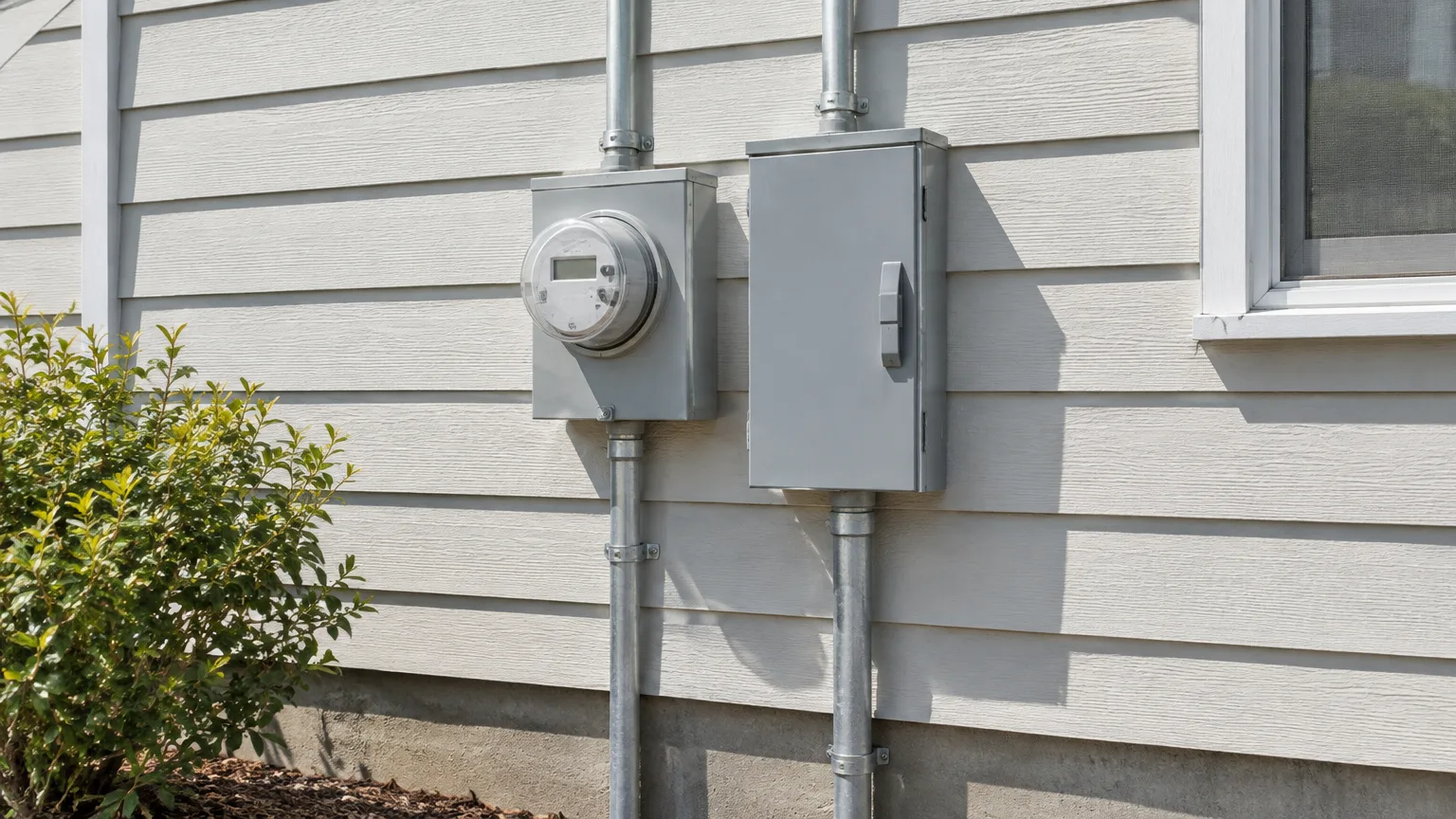
Find the billing period and the electricity used
Look for the start and end dates of service, the number of days billed, and a line marked “electric usage,” “energy used,” or “kWh.” A 33-day bill will often cost more than a 28-day bill even if your habits haven’t changed. For a fair month-to-month comparison, divide total kWh by the number of billing days.
A kilowatt-hour measures an amount of energy, not the speed at which you use it. A 1,000-watt appliance running for one hour uses 1 kWh; a 100-watt appliance running for 10 hours also uses 1 kWh. Your bill may show kW as well, but that means something different: kilowatts measure power at a point in time. The U.S. Department of Energy’s guide to electricity bills distinguishes charges based on kWh consumed from demand charges based on kW, which are more common on business bills.
Next, find the electric rate or plan name. Don’t assume that a bill showing 600 kWh charged all 600 at one price. Some plans divide usage into tiers; others divide it into peak and off-peak periods. The plan name tells you which pricing rules to check.
Check how the meter readings produced your kWh
Many bills show a previous meter reading and a new reading. Subtract the previous reading from the new one to get the usage for the period, unless the bill shows a multiplier or another adjustment. For example, a reading of 18,940 after a previous reading of 18,340 indicates 600 kWh.
Those readings are usually cumulative, like a car’s odometer. The new reading is not the amount used this month; the difference is. If your arithmetic differs slightly from the bill, check for rounded display values or a stated multiplier before assuming there’s an error.
Also look for “actual,” “estimated,” or “customer read.” An estimated bill uses a calculated reading instead of a confirmed one, so it may be lower or higher than your actual use. When an actual reading becomes available, the resulting bill may reflect the difference. Con Edison lists estimated readings and billing-period length among the first things to check when a bill looks unusually high.
If a reading seems wrong, compare the meter number on the bill with the meter serving your home, note the bill’s reading date, and photograph the display. A meter you read today should normally be higher than a reading taken days ago. For an older dial meter, follow your utility’s instructions rather than guessing where a pointer sits; Con Edison provides separate directions for dial and digital meters. Contact the utility if the readings, meter number, or estimated-usage history still doesn’t make sense.
Separate fixed charges from charges based on usage
An electricity bill commonly mixes several ways of charging you. Read the unit beside each rate; it does more work than the label alone.
| What the bill shows | How to read it | What changes the amount |
|---|---|---|
| Customer, basic service, or base services charge | A fixed charge, often stated per day or per month | Usually the number of billing days or the terms of your plan—not how many kWh you use |
| Energy or supply charge | A price for electricity supplied, often in dollars or cents per kWh | kWh used and the applicable supply rate |
| Delivery or distribution charge | The cost of getting electricity to you; it may include both fixed and per-kWh items | The rate design and, for usage-based items, your kWh |
| Taxes, riders, and adjustments | Additional items listed under their own names or within supply or delivery | The specific rule for each item |
For a daily fixed charge, multiply the daily amount by the days billed. A $0.70-per-day charge on a 30-day bill is $21, even if you used very little electricity. A monthly customer charge serves a similar purpose but may be displayed and calculated differently. PG&E, for example, describes its Base Services Charge as a cost per day, so its billed total can vary with the length of the billing period.
Don’t confuse a fixed daily charge with a fixed price per kWh. The first adds a set amount for each day of service. The second keeps the unit price steady while the total still rises as you use more electricity.
“Supply” and “delivery” answer a different question: what are you paying for? Supply is the electricity itself. Delivery covers the system that brings it to your home. A delivery line is not necessarily fixed; many bills include a per-kWh delivery charge as well as a customer charge. Con Edison’s residential bill guide shows supply and delivery in its service-charge details, along with meter readings and applicable taxes.
Depending on where you live, a separate company may provide your electric supply while the local utility delivers it. The charges can appear on one statement or separate bills. If you’re checking the full cost of electricity—or comparing supplier offers—include both. Con Edison notes that customers who choose another energy supplier still receive delivery service from the utility.
Work through the charges, not just the total due
Here’s an illustrative 30-day bill for a household that used 600 kWh on a plan with one supply rate and one delivery rate:
| Charge | Calculation | Amount |
|---|---|---|
| Fixed customer charge | 30 days × $0.70/day | $21 |
| Electric supply | 600 kWh × $0.12/kWh | $72 |
| Usage-based delivery | 600 kWh × $0.09/kWh | $54 |
| Other charges and taxes | As itemized on the bill | $9 |
| New charges for this period | $156 |
The rates are examples, not a quote for any utility. If the household cuts usage by 100 kWh under this simplified rate, the supply and usage-based delivery portions fall by $21. The $21 fixed charge doesn’t disappear, and taxes or adjustments may change too.
Now compare “new charges” with “amount due.” If the account had a $25 unpaid balance, the amount due could be $181 even though this period’s electricity charges were $156. A payment plan, credit, or correction can create the same kind of gap. Use the billing summary to reconcile them before trying to explain the full amount due through this month’s kWh.
One tempting shortcut is to divide the amount due by total kWh and call the result your electricity rate. That gives an average paid per kWh, not necessarily the rate charged for another kWh. Fixed fees, taxes, credits, and past balances can all be folded into that average.
Read peak and off-peak lines on a time-of-use bill
Time-of-use pricing assigns different rates to electricity used during specified periods. Peak hours cost more; off-peak hours cost less. A plan may also have a mid-peak or super-peak period. The hours can change by season or day of the week, so use the schedule for your own plan rather than assuming “off-peak” means every evening or weekend.
A time-of-use bill might show 200 kWh at $0.28/kWh during peak hours and 400 kWh at $0.10/kWh off-peak. Those energy charges are $56 and $40, for a total of $96. The household still used 600 kWh, but its cost depends on how that usage was split. Under those example rates, moving 100 kWh from peak to off-peak hours would reduce the energy charge by $18, assuming everything else stayed the same.
Read the headings over those rates carefully. Are they supply rates, delivery rates, or combined rates? Does a separate fixed charge apply? A time-of-use price advertised for one part of the bill may not equal the all-in price you pay for that hour. Con Edison’s time-of-use schedule, for instance, lists peak and off-peak delivery prices, a monthly customer charge, and a warning that listed rates exclude certain surcharges.
The useful question isn’t simply whether an off-peak rate is low. It’s how much of your usage falls in each period, and what you can reasonably move. Running a dishwasher later may help a little; moving a large, regular load may help more. Before changing plans, compare the full bill under each option, including fixed charges and any supply and delivery rates that differ.
When the bill still doesn’t add up
If this month’s amount jumps, check the causes in a practical order:
- Compare kWh per day, not just dollars. If usage rose, look at weather, heating or cooling, new equipment, and changes in who was home.
- Compare the rates and plan. If kWh stayed similar but the cost rose, inspect supply and delivery prices, time-of-use periods, and any rate change shown on the bill.
- Check readings and billing days. An estimated bill followed by an actual read, or an unusually long billing period, can distort a simple month-to-month comparison.
- Reconcile the account summary. Look for a previous balance, credit, correction, late fee, or other adjustment before treating the amount due as this month’s energy cost.
If you still can’t account for a charge, ask the utility to explain that specific line item and the reading or rate used to calculate it. Keep the bill, your meter photo, and the prior bill handy. Once you’ve separated usage, price, fixed charges, and account adjustments, you can ask a much clearer question—and spot a much clearer answer.