A workable language routine gives you repeated contact with the language and regular chances to use it. It doesn’t require an uninterrupted hour. If you have about 20–25 minutes spread across the day, you can make room for vocabulary, listening, speaking, and grammar without turning every evening into a study session.
Building the routine is straightforward; keeping it realistic takes a little judgment. Allow 15–20 minutes to set it up, then try it for two weeks before changing much.
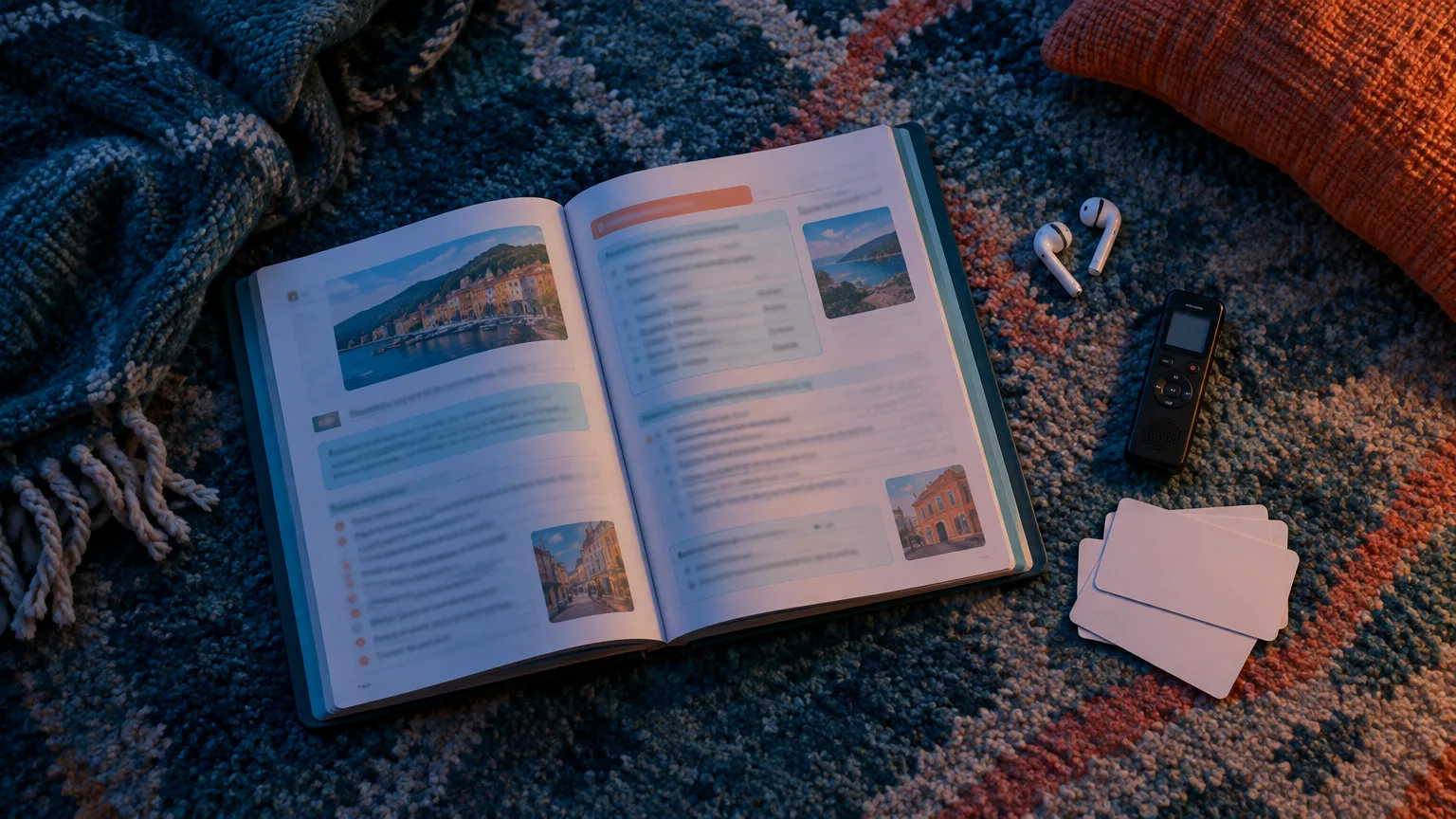
You’ll need:
- One language course, textbook, or other structured source suited to your level
- Short audio with a transcript, captions, or an answer key
- A place to save useful words and phrases, such as a notebook or flashcard app
- A phone or other way to record your voice
- A calendar or reminder you already use
1. Choose one thing you want to do in the language
Start with a use you can picture: ordering lunch, following a cooking video, introducing yourself to a colleague, or discussing a hobby. “Become fluent” is too distant to guide Tuesday’s practice. “Describe my weekend for two minutes” gives you something to listen for, say aloud, and check.
Make the goal small enough for the next few weeks. A beginner might aim to ask and answer five basic questions. An intermediate learner might work on explaining an opinion without switching to English. You can keep a long-term goal, but your daily work needs a nearer target.
This choice also helps you reject material that looks interesting but won’t serve you yet. If your goal is conversation, a list of obscure nouns is probably less useful than phrases for asking someone to repeat themselves.
2. Put short sessions into time slots you already have
Choose three or four points in your day when a few minutes are usually available. For example:
| Time | Practice | Length |
|---|---|---|
| After breakfast | Recall vocabulary | 5 minutes |
| Lunch break | Listen to a short clip | 8 minutes |
| After work | Speak aloud | 5 minutes |
| Before bed | Practice one grammar pattern | 5 minutes |
That’s 23 minutes, but it never asks you to find 23 minutes at once. Treat the slots as appointments, not exact times: “after breakfast” often survives a late start better than “7:15 a.m.”
Don’t build a schedule around your most energetic day. Use an ordinary busy day as the test. If four slots are unrealistic, start with two and alternate the activities. You might listen and speak on Monday, then review words and practice grammar on Tuesday. The aim is to make all four activities regular, not to fit all four into every day at any cost.
Pick a five-minute fallback for days that go sideways. Reviewing a few words and saying two sentences aloud keeps the routine usable without pretending that every day will look the same.
3. Prepare one small set of materials
Gather enough material for a week, not a semester. Bookmark several short recordings you can mostly follow, choose the next few lessons in your course, and keep your words in one place. If finding a new video takes longer than listening to it, preparation has taken over the routine.
A structured course is helpful because it gives your practice a sensible sequence. You don’t need to finish a lesson in one sitting; you can borrow its vocabulary, audio, and grammar point across several days. If you haven’t settled on one, choose a course that fits your goal and available time before building a schedule around it.
Keep the materials close enough to use at the planned time. Download audio if reception is unreliable, leave the notebook by your breakfast spot, or pin the course to your phone’s home screen. These small choices remove the moment of hesitation when a short session begins.
4. Recall a few useful words
Use the first slot to test yourself on words and phrases you’ve met before. Look at the meaning or a cue, try to produce the expression, then check it. Say it in a sentence if you can. Reviewing “Could you say that again?” is more useful for conversation than recognizing it on a screen but being unable to retrieve it when needed.
Keep new items modest—perhaps three to five a day while you’re establishing the habit. A phrase you can use is often worth more than a single isolated word. Revisit older items across later days instead of clearing a large list once and forgetting it. In a study of second-language vocabulary practice, spaced review produced better delayed recall than concentrating the practice into one session.
If you miss an item, check the answer and try again later. The useful measure isn’t whether your flashcard count rises; it’s whether words come to mind when you need them.
5. Listen to a short clip with a task in mind
Choose audio that gives you a fair chance of understanding the main point. Eight minutes might cover one short clip heard twice, not eight minutes of new material. On the first listen, ask a simple question: Who is speaking? What are they trying to do? What changed? On the second, listen for one or two phrases you could use yourself.
A transcript or captions can help you check what you missed. Try listening before reading them, then listen again with the text if needed. This turns the text into a check rather than making reading do all the work. If the clip is so difficult that you can’t identify its subject after several tries, choose something easier or shorter.
Background audio can add contact with the language while you do chores, but don’t count it as a substitute for this focused session. You need at least some moments when you notice what was said and test what you understood. A 45-second exchange you can follow and revisit may do more for this routine than a podcast you tune out after five minutes.
6. Speak about the same topic
Use your speaking slot to produce language, even if nobody else is available. Answer a question from the lesson, summarize the clip, or describe something you did today. Record yourself for a minute, listen back, and try once more. The recording doesn’t have to sound polished; it gives you a way to notice where you pause or reach for a word.
Reusing the day’s material makes a short session easier. If the audio featured someone arranging a meeting, try arranging a different one aloud. Change the day, place, and reason rather than reciting the original exchange. Beginners can work with two or three sentences. More experienced learners can aim for a fuller answer and note the point where they got stuck.
Solo speaking is a practical starting point, but make room for conversation when you can. A partner, tutor, or classmate can respond in ways your prepared prompts won’t. In a semester-long study of learner interaction, groups that practiced speaking with corrective feedback improved in both measured accuracy and fluency. That doesn’t mean you need daily tutoring; it’s a reason to seek occasional, specific feedback rather than relying only on rehearsed speech.
7. Practice one grammar pattern you can use tomorrow
Give grammar a small, defined job. Pick a pattern that came up in your listening or blocked you while speaking: a past-tense form, a question structure, or a way to compare two things. Check the explanation in your course, then make three sentences of your own. Change one detail in each sentence so you have to think about the form rather than copy an example.
Don’t try to cover an entire chapter in five minutes. If the explanation is complicated, spend one session understanding it and the next using it. The point is to connect the rule to something you want to say. If you keep making the same mistake, save one clear example and ask a teacher or proficient speaker about that specific sentence.
Grammar can move to another time of day if you’re too tired to think clearly at night. The order of the four daily activities matters less than giving each one a repeatable place.
8. Check the routine once a week
After a week, spend 10 minutes trying the task you chose in step one without looking at your notes. Record your answer or write it down. Can you say more than you could last week? Do familiar phrases come back faster? Can you understand a short recording that was difficult before? Keep an early sample so you can compare like with like.
Then adjust the routine based on what actually happened. If you completed vocabulary practice but skipped speaking every day, move speaking into an easier slot; don’t simply promise to try harder. If the audio was consistently too hard, lower its difficulty. If your schedule held but you can’t use the words in a sentence, add more recall and spoken use instead of adding more new words.
You can tell the routine is working when practice fits into ordinary days and the language becomes easier to retrieve or understand in the tasks you care about. Progress won’t be equally visible every week, but the routine should give you evidence beyond a streak counter.
If you practice steadily and remain stuck on a persistent pronunciation problem, a recurring grammar error, or a high-stakes need such as an exam or workplace presentation, work with a qualified teacher or tutor. They can identify what you’re missing and give targeted feedback that a self-directed schedule may not provide. Keep the short daily sessions: professional help is most useful when you have regular opportunities to put that feedback to work.