A vegetarian dinner can look generous and still leave you hunting for a snack an hour later.
You don’t need a calorie target to fix that. Build the meal around a substantial protein food, add produce and a satisfying grain or other starch, then use fat and seasoning to make it worth eating. The plate is a starting point, not a rule about how much you’re allowed to have.
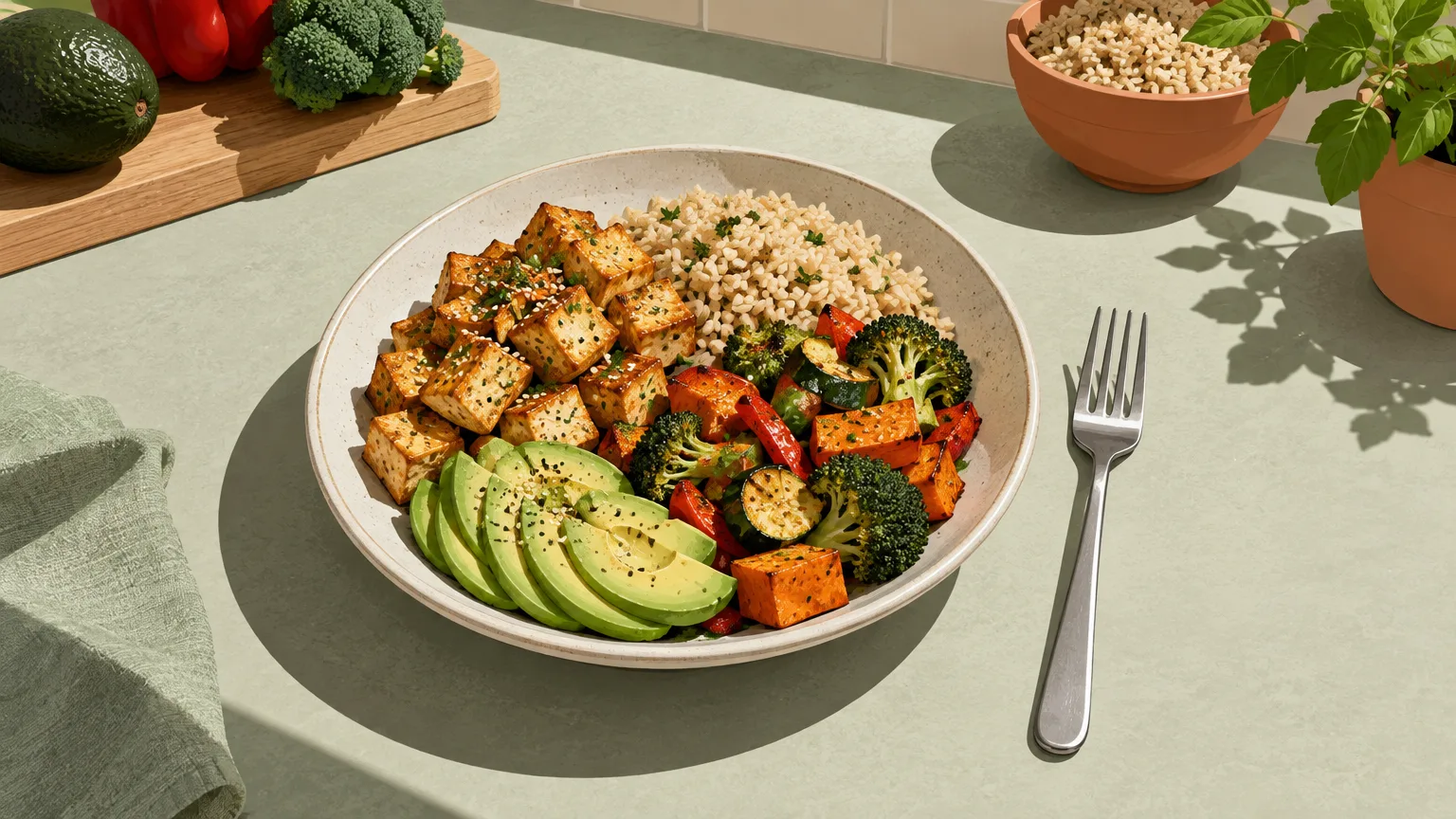
It works for breakfast and lunch as well as dinner.
You’ll need:
- A plate or bowl and basic cooking tools if you’re preparing food
- A vegetarian protein, such as beans, lentils, tofu, tempeh, eggs, or yogurt
- Vegetables or fruit, fresh, frozen, or canned
- A grain or other starch, such as rice, oats, bread, tortillas, or potatoes
- A source of fat and flavor, such as olive oil, avocado, nuts, seeds, or a dressing
Build the meal in six steps
1. Choose the protein first
Pick a food you can make a meaningful part of the meal—not just a garnish. Lentils can form the base of a soup; tofu can take up a good share of a stir-fry; eggs or yogurt can anchor breakfast. Beans, soy foods, eggs, and dairy are all useful vegetarian protein choices. If you don’t eat eggs or dairy, beans, lentils, tofu, and tempeh give you plenty of ways to start.
This order matters because protein is easy to overlook when you build a meal around pasta, rice, or salad greens. A bowl of rice with vegetables and a few scattered chickpeas is different from a bowl in which chickpeas are one of the main ingredients. Nuts and seeds contribute some protein, but they’re often more practical as an addition than as the only protein in a main meal.
You also don’t need to pair beans with rice at every sitting to “complete” the protein. Eating a variety of protein foods over the day is enough; those foods do not have to be combined at the same meal.
2. Add vegetables or fruit
Now bring in produce. For a lunch or dinner plate, roughly half the space is a useful visual guide: think roasted broccoli and carrots beside tofu, or a generous pile of greens and tomatoes alongside a bean-and-grain bowl. It’s a guide to building variety, not a portion limit. A plate divided among produce, protein, and whole grains is one simple way to see what a meal may be missing.
Use what fits the dish. Frozen peppers belong in a quick skillet; canned tomatoes work in lentil stew; fruit makes sense with oatmeal or yogurt. You don’t need several colors at every meal. Rotate what you buy across the week instead.
If beans or lentils are your protein, adding bell peppers, tomatoes, broccoli, or citrus has another benefit: vitamin C helps your body absorb iron from plant foods. A squeeze of lemon over lentils is useful for flavor and nutrition.
3. Include a grain or another satisfying starch
Add rice, quinoa, oats, whole-grain bread, pasta, a tortilla, potatoes, or sweet potatoes—whichever makes sense with the meal. Whole grains are a useful everyday choice, but a balanced vegetarian meal doesn’t depend on choosing a whole grain every time. A baked potato topped with bean chili, for example, already has its starch.
Don’t skip this step just because the vegetables fill the plate. If lunch is a large salad with tofu and dressing but leaves you hungry well before dinner, bread, a grain, or potatoes may be the missing piece. Likewise, a small serving of beans beside vegetables may need both a more substantial protein portion and some starch. The aim is a meal that carries you comfortably to the next time you eat, not one that passes a visual test.
4. Add fat and make it taste good
Use olive oil to roast the vegetables, add avocado to a bean wrap, scatter walnuts over oatmeal, or finish a grain bowl with tahini dressing. Some foods—nuts, seeds, avocado, cheese, and eggs—already bring fat to the meal, so you may not need a separate addition.
Then season it. Salsa, herbs, vinegar, lemon, garlic, and spices can make the same basic ingredients feel like different meals. Consider how much more appealing chickpeas, rice, and vegetables become with a lemon-tahini sauce, or how a spoonful of salsa pulls together eggs, black beans, and a tortilla. A meal you enjoy is easier to make again.
For variety over the week, walnuts, chia seeds, and flaxseed supply a plant form of omega-3 fat. You don’t have to fit them into every plate.
5. Check the nutrients the plate picture can’t show
A balanced-looking plate doesn’t tell you everything about your diet. If you eat eggs and dairy, they can contribute vitamin B12 and calcium. If you eat no animal products, make a dependable plan for B12: plant foods contain it only when fortified. Check the label on a fortified food you use regularly, or discuss a B12 supplement with a clinician or registered dietitian. Don’t assume every plant milk or nutritional yeast contains it.
Calcium deserves a similar check if you avoid dairy. Some plant milks and tofu provide calcium, but their amounts vary by product and, for tofu, by how it’s made. Read the label rather than assuming a substitute has the same nutrients as milk; the FDA recommends comparing plant-based alternatives for nutrients including protein, calcium, and vitamin D. Beans, greens, and whole grains add useful nutrients too, but no single meal has to cover a full day’s needs.
This is a check on your eating pattern, not a demand to calculate every nutrient at dinner. If your meals regularly draw from several protein foods, produce, and grains—and you have a reliable B12 source when you need one—you’ve done the more useful planning work.
6. Serve it, then adjust to your appetite
Put the components together and eat enough to feel satisfied. A rough plate layout can help you remember the ingredients, but it can’t know how hungry you are, what else you’ve eaten, or how active your day has been; nutrition needs differ from person to person.
If you finish and are still hungry, have more food. If the same kind of meal leaves you hungry soon afterward, notice what keeps coming up short: Was the protein merely a topping? Did you leave out the starch? Was the meal mostly raw vegetables? Change that part next time rather than treating hunger as a failure of willpower.
You can use the same process without arranging food in separate sections. Lentil soup with vegetables, whole-grain toast, and olive oil contains the pieces. So does a tofu-and-vegetable stir-fry over rice with peanuts. For breakfast, try oats with yogurt or fortified soy milk, fruit, and walnuts; if that’s too little for you, make a larger bowl or add another protein food. The combination matters more than the shape of the plate.
How to tell if the approach is working
Look at the meal and ask four questions: Is there a clear protein source? Did I include produce? Is there a grain or another starch? Is there some fat or a flavorful addition that makes this enjoyable? Then pay attention to how you feel after eating and before your next meal.
If meals keep falling short, troubleshoot the pattern rather than reaching for a calorie counter. A pasta-and-vegetable dinner may need lentils or tofu. A salad that looks enormous may need both beans and bread. If you feel comfortably fed but the meal feels repetitive, change the seasoning or swap one ingredient—not the whole system.
This method is for everyday meal building, not for treating a medical condition. Work with a registered dietitian or other qualified clinician if you’re pregnant, have a condition that changes your nutrition needs, are concerned about a deficiency, or find that food rules or calorie tracking are causing distress. Those situations call for advice tailored to you, not a plate template.
Disclaimer
This article provides general nutrition information and is not a substitute for individualized advice from a qualified health professional.