A claim goes more smoothly when you can show what was damaged, what you did to prevent it from getting worse, and what you spent. You do not need a finished inventory or repair estimate before calling your insurer. You need a safe, reliable first record—and then you can add detail as you learn more.
The first pass is manageable with a phone and a notebook. Do not spend time inside a building that may be unsafe.
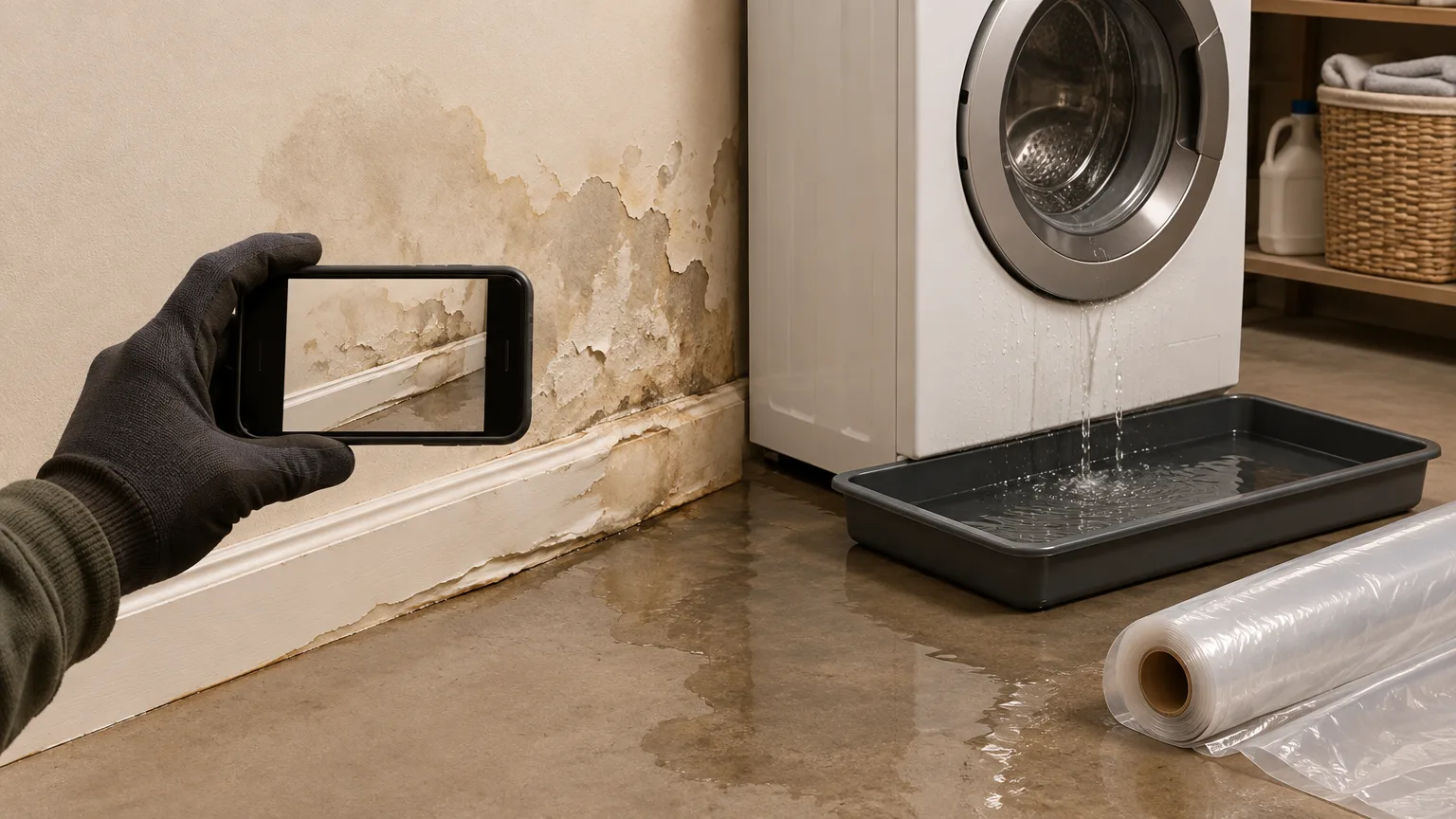
Have these tools ready if you can:
- A phone or camera, with a charger
- A notebook or notes app
- Your policy or insurer’s contact information, if available
- A folder, envelope, or cloud storage for photos, receipts, and messages
- Basic protective gear appropriate to the damage, but only for areas that are safe to enter
1. Make sure it is safe to approach the damage
Check on people first and call emergency services if needed. Do not enter a home with obvious structural damage, downed power lines, or other signs that it may be unsafe. Do not touch a wet electrical device or operate a switch while standing in water. If you suspect a gas leak, leave and contact the gas utility or emergency services from a safe location. The CDC advises having a professional inspect a visibly damaged home before you go inside.
You can start a record without entering. Photograph what you can see safely from outside and write down when you first noticed the damage. If officials have restricted access, note that too. No insurance photograph is worth an injury.
2. Photograph the scene before you move or clean anything
Start with wide shots that show the location and extent of the damage: each affected room, the exterior, and any damaged garage, shed, or fence. Then take closer shots of specific problems—stained ceilings, broken windows, damaged flooring, ruined furniture, and visible water lines. Include a recognizable reference point so a close-up can be matched to its room or wall.
Record a slow video walkthrough if it is safe. Say the date, address, and room name aloud; describe what you can observe rather than guessing at a cause. For example, “Water is coming through the ceiling near the kitchen window” is more useful than declaring that a particular roof defect caused it. Photograph appliance labels, model numbers, and serial numbers where accessible. Federal flood-claim guidance specifically recommends wide and close views before cleanup and images of damaged items and serial numbers.
Keep the original files. You can make labeled copies to send to the adjuster, but avoid editing your only record or relying on a few selected images when the damage extends farther.
3. Write down what happened while the details are fresh
Make a short timeline: when the event occurred, when you discovered the damage, what you saw or heard, and what actions followed. If a pipe burst, note where water appeared and when it was shut off. If a storm damaged the house, record the date and which areas were affected. Keep observations separate from anything you have not confirmed.
Add the names and contact details of people who can help establish what happened, such as a plumber who found a failed pipe or a neighbor who noticed a fallen tree. For theft or vandalism, report the incident to police and keep the report number; the Insurance Information Institute recommends retaining police-report details for those claims.
This timeline is not a test of memory. It is a way to keep later conversations, photos, and invoices tied to the same event. If you learn something new, add a dated note instead of rewriting an earlier observation as though you knew it from the start.
4. Contact your insurer promptly
Once people are safe and you have a basic record—or sooner if urgent work cannot wait—call the insurer or agent. Give your name, address, contact information, when the loss happened or was discovered, and a plain description of the damage. Say whether the home is safe to occupy and whether you need to arrange temporary protection. You can tell the insurer that photographs, an inventory, and estimates are still being assembled.
Do not delay notice while trying to make the packet perfect. The National Association of Insurance Commissioners advises contacting the insurer promptly when you decide to claim and says reporting timeframes vary. Ask for the claim number, the next deadline, how to send evidence, and whether an adjuster needs to inspect before particular work begins. Write down the name of the person you spoke with and what they said.
If the loss looks minor, check your deductible before deciding whether to file—but do not assume a small visible stain means a small repair. If water came from rising floodwater rather than, for example, a pipe inside the house, tell the insurer where it came from and ask about the appropriate policy. Standard homeowners coverage generally does not cover flood damage; flood insurance is separate.
5. Make necessary temporary repairs and record the work
Take reasonable steps to keep the damage from spreading. That may mean arranging a board-up for a broken window, having a professional stop a leak, or hiring someone to cover an opening in the roof. Photograph the area immediately before and after the work. Save written work orders and ask the contractor to distinguish emergency protection from permanent repair.
Do not climb onto a damaged or wet roof, handle unsafe wiring, or attempt structural work for the sake of saving a service charge. Use a qualified professional for those jobs. If the insurer has not yet inspected, tell it what must be done urgently and ask how to preserve evidence. Do not postpone a necessary safety measure simply because an adjuster has not arrived.
Temporary repairs that prevent further damage may be reimbursable when the underlying loss is covered, but keep every receipt and check your policy with the insurer. An emergency invoice is evidence of what you paid; it is not, by itself, a decision that the expense is covered.
6. Build a room-by-room damage inventory
Once the urgent work is under control, list damaged belongings separately from damage to the building. Work through each room, closet, basement, and storage area. For each item, record what it is, the quantity, brand and model if known, approximate age, what you paid if known, and its condition after the event. Link items to photo filenames or number them on your list.
For example, “Living room: one six-year-old sofa, water-stained across the seat and lower frame; photos LR-04 to LR-07” gives an adjuster far more to work with than “furniture ruined.” Add the damaged wall, flooring, and trim to a separate list of building damage so they are not lost among the contents.
Use old receipts, order histories, manuals, warranty emails, or photos taken before the loss to fill gaps. If those records were destroyed, work from memory and mark uncertain dates or amounts as estimates. The NAIC’s post-disaster guidance says homeowners can use earlier household photos to reconstruct an inventory; you do not have to invent precise purchase details you cannot verify.
7. Keep damaged materials when it is safe to do so
Set damaged items aside for the adjuster if they can be stored safely. Ask before discarding a failed part, appliance, or material that may help show the extent or source of the loss. If a contractor removes something during emergency work, request photographs of it in place and after removal, and ask whether a small sample can be retained.
Health hazards are an exception. Do not keep spoiled food, sewage-contaminated goods, or moldy items in living space just to preserve a claim. Photograph and list them before disposal if it is safe, and tell the insurer what was discarded and why. For flood claims, National Flood Insurance Program guidance allows disposal of items that present a health hazard and recommends retaining samples of materials such as damaged carpet when possible. Other policies may have different procedures, so ask your own insurer for instructions.
8. Collect receipts and keep one claim file
Put emergency-repair invoices, supply receipts, contractor estimates, and any payment records in one place. If you cannot stay in the home, also save hotel and other extra-expense receipts; ask the insurer what additional living expense coverage your policy provides before assuming a purchase will be reimbursed.
Keep a dated contact log with the claim number, adjuster’s name, calls, emails, requests, and documents sent. Back up photos and scanned receipts somewhere other than the damaged home. When you send evidence, keep a copy and note what was submitted. Add newly discovered damage to the file and notify the adjuster rather than assuming the first walkthrough captured everything.
For substantial structural damage, a repair estimate and your policy limit answer different questions. The estimate describes the work needed for this loss; the dwelling limit sets a coverage boundary. If you are unsure how that limit was chosen, calculating coverage from rebuilding cost rather than resale value explains the distinction.
Check your record before the adjuster visits
Your documentation is ready for the first claim conversation if someone unfamiliar with your home can follow it: the timeline identifies the event, photos show each affected area, the inventory identifies damaged belongings, and receipts show what you spent to protect the property. You should also know what you discarded, why, and whom you told.
If that account has gaps, do not guess to fill them. Ask a contractor for a written description of work already performed, search for older photos or purchase records, and send the adjuster an updated list as facts become clear. If the damage involves unsafe structure, electricity, gas, extensive contamination, or a source you cannot locate, leave inspection and repair to qualified professionals. They can address hazards you cannot safely assess while giving the insurer a clearer account of the work required.
Disclaimer
This article provides general insurance information, not advice about your specific policy or claim. Coverage, duties, and deadlines depend on your policy and state law.